Downsizing
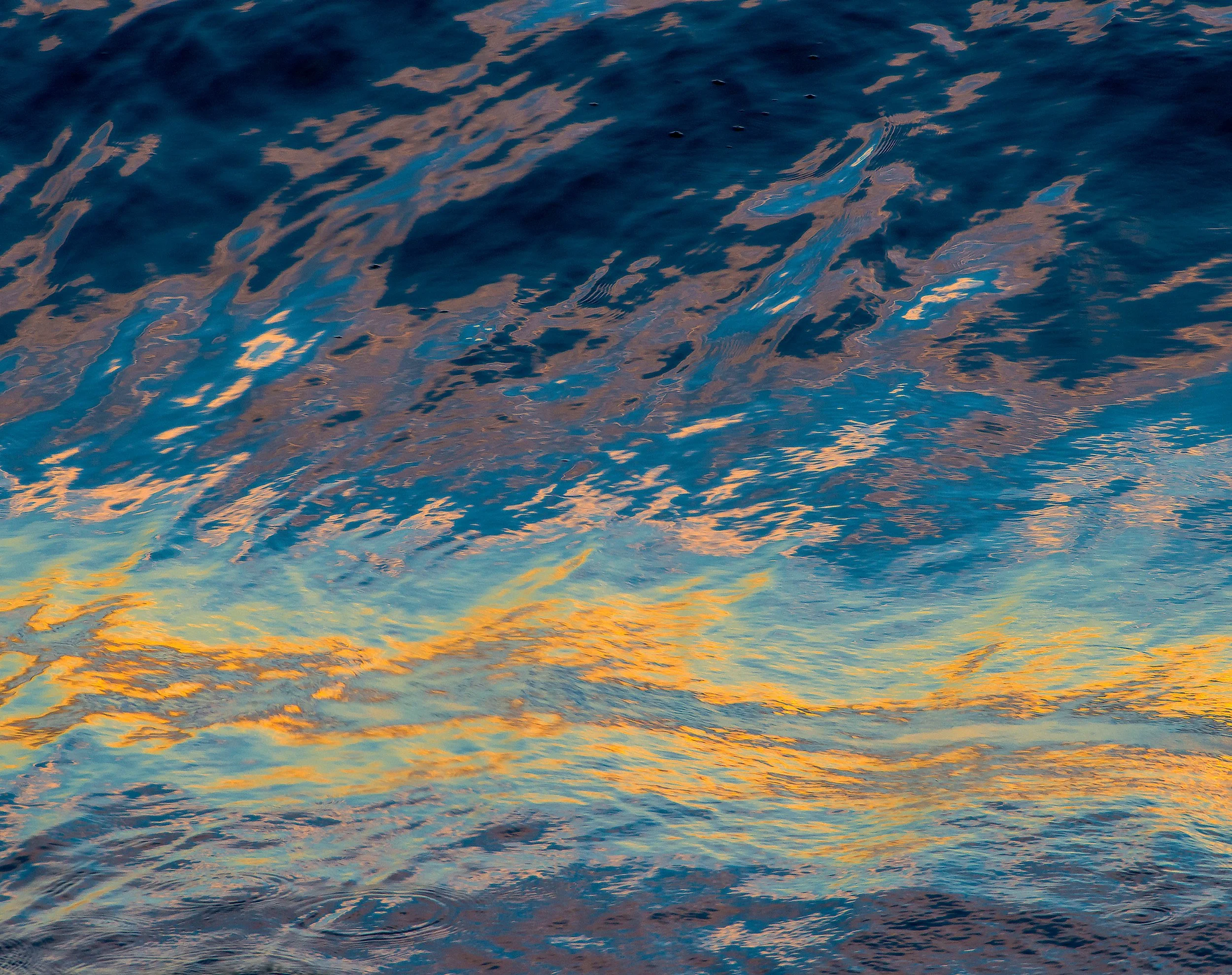
OK, OK, so it’s a little computer!
I’d been shooting film for 25 years. And though I’d edited others’ digital files for quite a spell, I wasn’t really seeing it for myself. But then one day, with the advent of the Nikon d800e full-frame dslr, it seemed like maybe there might be a mature, practical, and portable digital camera that could do some of the things my 4x5 view camera could. Plus there were long lenses and zooms! Processing labs were shutting down left and right, my favorite films were all going away, and I was drum-scanning every image anyway and then printing digitally. So why not check it out?
When holding this little beast, the first takeaway was, of course, its svelte size and weight. These digital slrs were one thing, but then “mirrorless” designs came along and dropped the optical viewfinder altogether, so they’re even smaller. And it’s not just the size of 4x5 gear to consider, it’s also the bulk and weight of the film and film holders. (Want to learn more about the view camera? See “Upside Down & Backwards.”)
Then there’s the flexibility factor. On my current Sony mirrorless, I now routinely use a 12-24 on the short side, and a 400-800 on the long end. And I like having adjustable ISO speeds. I miss the view camera’s movements, but I do usually carry one or two Canon tilt/shift lenses that I use with Metabones adapters.
And what about latitude, or dynamic range? On transparency films, I’d figure a 5-stop spread between any important shadow details and highlights, maybe even less. One can argue the exact numbers (and folks sure do!), but suffice it to say that good digital sensors can do twice that. Which is pretty darn useful.
Not sure if you got the shot? Check it on the rear LCD screen, and if you didn’t, try again. Want it sharper? Or blurrier? Ditto. Those exposures are “free” (though big memory cards and hard disk space are not!).
And there’s all this, too: a good built-in meter and auto exposure; a histogram to display that exposure and a dial to tweak it up or down; auto color balance that is easily changeable; auto focus; and even image stabilization. Plus exposure bracketing and focus bracketing…Buttons set for focus magnifying and focus peaking…And zebras and blinkies, too. These cameras shoot like a zillion frames per second.
But I use almost none of that.
Indeed, at first I had to really slow myself down.
I grew up with the contemplative craft of composing and feeling as fostered by my 4x5 view camera—and I missed that. I still really want the experience of using the camera as a tool for seeing and as a witness to a moment in time. The bells and whistles were making me sloppy.
So when I go digital, I almost always mount my Sony on a sturdy tripod. And I still use a cable release or a wireless remote (love that!) to trip the shutter. I don’t “strafe” or “run-and-gun” with the camera, I first study scenes through my framing card. (See “Frame Your World.”) And since I’ve always loved that revelation of things coming into focus—especially on the view camera’s ground glass—I almost never use autofocus.
So what’s best—film or digital? They’re just different tools and different rhythms. Want precision? The view camera gets the nod. Image quality? Again, I’d say view camera. Speed, flexibility, and ease of use? Digital, for sure. Cost? Digital, bigtime.
But be forewarned: if you venture to the land of pixels, you’ll be floating in cyberspace from the moment you push the shutter button. There’s kinda no there there. No record, no bedrock like you might have with a piece of film. Editing and processing tasks can stack up quickly.
You can do lots and lots of things to tweak or bend a digital file, but what should you do? It takes some time to find your own path through all the options. For starters, I’d say just strive to keep it simple and streamlined.
Oh, and one more scrap of advice: Since all those pixels need to live somewhere, ya better get used to sitting in front of a computer screen!
EXAMPLE: My photo “Lightning Bolt,” shown at top, is a tight detail of a fast-moving wave face at sunset. It was shot with a digital Nikon d850 and a long zoom lens set at 500mm, and exposed at 1/50s @ f16, ISO 800. I set the meter on aperture priority and used ISO to override the speed as needed. Smaller tweaks were then made with the exposure compensation dial. I’m timing things via the viewfinder. FWIW, this image would be largely impossible to make with my view camera.
By Scott Atkinson
Contents copyright 2026. All rights reserved.